
The Nations Championship Won't Survive Its Own Ambition

The problem with the Nations Championship is not that international rugby needs another competition. It is that rugby's administrators appear to believe another competition can solve problems created by the way they already run the sport.
There is an attractive idea at its centre. The best northern and southern hemisphere teams would meet more regularly, supporters would get meaningful fixtures beyond the familiar annual rivalries, and the international game would have a coherent competition capable of attracting broadcasters and sponsors. For countries outside the traditional elite, a more structured international calendar could also offer opportunities that occasional tours cannot guarantee.
That is the sales pitch, and the first piece on Nations Championship rugby set out what it gets right. It is not difficult to understand why unions have embraced it. International rugby needs attention, predictable fixtures and commercial growth. The sport has spent years discussing how to make its global calendar more compelling without damaging the competitions that already matter.
But the Nations Championship risks becoming an answer to the wrong question. Instead of asking how international rugby can become more sustainable, its architects have concentrated on how much more significance they can fit into the existing calendar.
That distinction matters. A competition can be commercially attractive, visually impressive and enthusiastically promoted while still making the wider sport worse. The Nations Championship is in danger of doing precisely that.
The real test is not whether the tournament can sell its first edition. It is whether international rugby will be healthier after years of trying to accommodate it.
The calendar is already carrying too much weight
The competition's basic structure sounds straightforward. Twelve teams are divided into northern and southern hemisphere groups. Each side plays three matches in July and three in November, with the results determining the rankings within each group. Those rankings then produce six cross-hemisphere matches at a three-day Finals Weekend in London.
The participating nations are England, France, Ireland, Italy, Scotland and Wales in the north, against Argentina, Australia, New Zealand, South Africa, Japan and Fiji in the south. The first ten represent the established Six Nations and SANZAAR structures; Japan and Fiji have been invited for the first three editions.
There is a reasonable sporting argument here. The traditional July and November internationals have often been criticised for their lack of context. A team might win a series in the summer, lose a few matches in November and move on without any wider competition tying those results together. The new format gives those fixtures a shared purpose. A win in July matters when November arrives.
But the calendar was not an empty space waiting for someone to give it meaning.
The Six Nations remains one of rugby's most important annual properties. The Rugby Championship has its own commercial and sporting identity. Domestic competitions need their international players available, while the European Champions Cup and domestic leagues already create substantial demands on elite squads. Add the British & Irish Lions tours and the Rugby World Cup, and the opportunities for meaningful rest become increasingly difficult to protect.
The Nations Championship is biennial, which is important. It does not add six entirely new international fixtures to every player's season. Its organisers have instead reorganised existing July and November windows and attached a competition to them. That distinction deserves recognition.
Yet reorganising fixtures does not automatically make them easier to play.
The new structure changes the geography, preparation and competitive consequences of those windows. It also introduces a Finals Weekend that turns the November programme into something with a fixed destination. Teams are no longer simply completing their autumn internationals. They are working towards a final ranking, a cross-hemisphere opponent and, for the leading sides, a championship decider.
That is more pressure attached to an existing workload, not necessarily more physical work in isolation. The distinction matters because rugby's administrators can point to the number of matches and argue that nothing substantial has been added. Players experience something less abstract: travel, preparation, recovery and the expectation that every match must be treated as consequential.
The wider calendar has also been reshaped around the competition's existence. The new global men's calendar was approved by World Rugby in 2023, with player-release periods and workload guidelines intended to make club and international rugby more compatible. That was an important reform, but it should not be mistaken for proof that every schedule subsequently built inside it will be sensible. World Rugby's calendar reforms set out an ambition to improve the relationship between the two levels of the game. The Nations Championship now has to demonstrate that it can deliver that ambition.
The problem is that its commercial timetable is already beginning to look like the priority.
The travel problem is bigger than the fixture list
The clearest warning came during England's July campaign.
England played South Africa in Johannesburg, Fiji in Liverpool and Argentina in Santiago del Estero on successive weekends. The itinerary required the squad to cover approximately 26,000 miles in a month, according to reporting by The Guardian. That is not a minor inconvenience attached to an otherwise normal international series. It is a significant logistical burden imposed on players at the end of an already demanding season.

Ben Earl described the experience as brutal. His criticism was not that international rugby should be comfortable. Nobody expects elite Test rugby to be a relaxing exercise, and travelling to represent a country has always been part of the job. His concern was that the schedule made proper preparation harder.
The practical consequences are important. A team arriving from another continent needs to recover from long-haul travel, adjust to a different time zone, train, prepare tactically and then play a Test match. Every day spent travelling is a day that cannot be used in the same way for preparation. Every disrupted night of sleep makes recovery more complicated.

Earl also suggested a different approach: bring more teams together in one host country and create something closer to a rugby festival. His proposal was straightforward. Rather than moving squads across multiple continents, teams could travel once, establish themselves in a host location and play their matches there.
It is an idea worth taking seriously.
A centralised tournament would have its own compromises. Home unions would lose some of the revenue and atmosphere associated with hosting major international fixtures. Supporters would have fewer opportunities to watch their teams in familiar stadiums. The host country would also need sufficient venues, accommodation and transport infrastructure.
But those are problems that organisers can plan for. The physical consequences of repeatedly moving players across continents cannot simply be solved by better marketing.
There is another uncomfortable question. If England's schedule was so demanding, what happens when other countries face similarly awkward combinations of destinations? The competition is supposed to bring the hemispheres together, but the geographical distances involved are not evenly distributed. A fixture that looks reasonable on a broadcast schedule can become considerably less reasonable when the squad has to make the journey.
The issue is particularly relevant to the southern hemisphere. South Africa, Argentina, Australia and New Zealand are already separated by enormous distances. Japan and Fiji add further geographical considerations. Moving between these countries is not equivalent to travelling between European capitals.
The November window reverses the direction of travel but does not remove the problem. Southern hemisphere sides must travel north, often after domestic seasons and other international commitments have already taken their toll.
Rugby needs to be honest about what it is asking of its players. The fact that a squad can physically complete an itinerary does not mean the itinerary is a good one.
The most damaging part of the England example is not the headline mileage. It is Earl's observation that the players simply had less opportunity to train. That goes beyond comfort and enters the territory of sporting quality. Supporters pay to watch the best possible teams compete. A structure that reduces preparation time risks delivering something less than that.
Rugby cannot grow its global audience by spending down the physical resources of its players.
Twelve teams do not automatically make a global competition
The Nations Championship has a legitimate claim to being more international than the traditional arrangements it replaces. Japan and Fiji are included alongside the established powers, and both countries bring something valuable to the competition.
Japan has demonstrated that it can compete with leading nations, most memorably through its performances at the 2015 and 2019 Rugby World Cups. Fiji has a long history of producing exceptional players and has become increasingly competitive at the highest level. Their inclusion is not charity. Both deserve meaningful international fixtures.
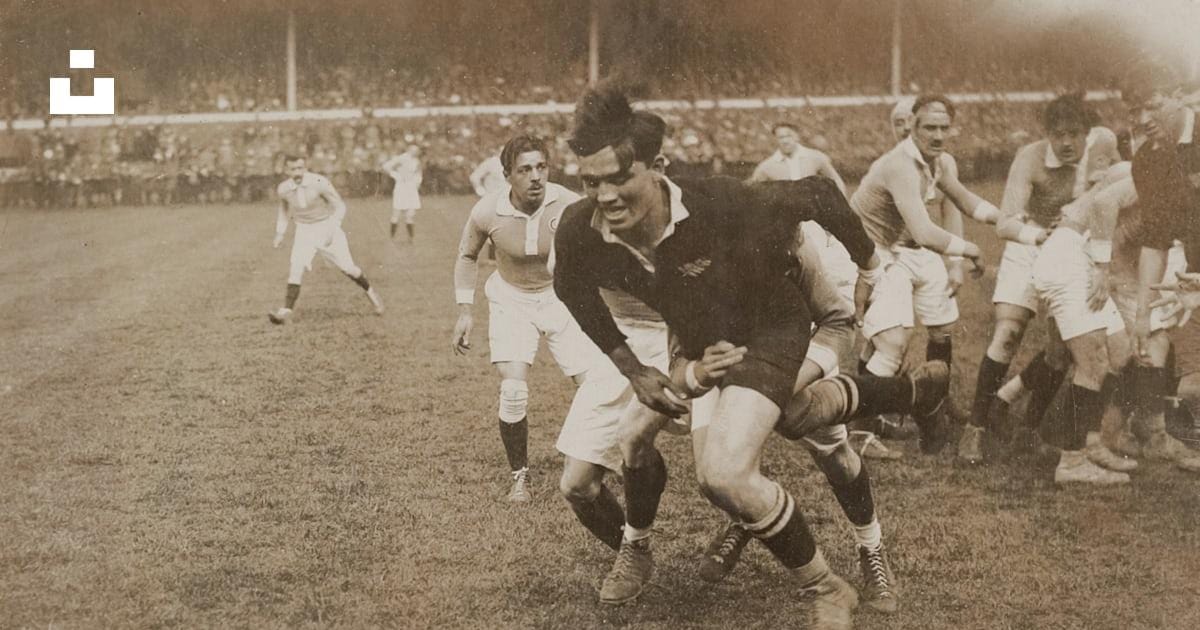
But the word global should not be used too casually.
The competition's twelve places are occupied by countries that already have substantial international infrastructure, established commercial relationships or a significant history at the top level. That is understandable for a premium tournament intended to attract audiences. It is also a limitation.
What about Georgia, Portugal, Uruguay, Chile, Romania, Spain and the other countries trying to build sustainable international programmes? What does the new competition offer them beyond the promise that they might eventually qualify for something better?
A global tournament should create a route into its own elite structure, not simply invite a handful of outsiders to make the product look more inclusive.
There is a second problem with the current arrangement. Japan and Fiji have been invited for the 2026, 2028 and 2030 editions. Their places are therefore guaranteed for the first three tournaments, but their longer-term position depends on the promotion-and-relegation arrangements that are supposed to follow.
This is a meaningful distinction. The competition is not permanently closed to other nations, at least according to the original framework. World Rugby's plans envisaged a pathway through a second tier, with promotion and relegation eventually connecting the two levels.
That is the right principle. It is also a principle that must survive contact with commercial reality.
A tournament involving the richest and most established unions will inevitably create valuable broadcast relationships. Those unions will want certainty over their fixtures and revenues. A smaller country hoping to enter the competition will want a credible sporting route and enough financial support to make participation worthwhile.
Those interests do not automatically align.
Georgia, for example, has repeatedly demonstrated its ability to compete in European international rugby. Yet the challenge of turning competitive performances into regular access to the biggest fixtures has been a persistent frustration. Portugal's progress has also shown that the international game has talent and an audience beyond its traditional centres.
The Nations Championship could help change that. But only if its second tier is treated as part of the same international project rather than a separate product for countries that have not yet earned access to the more profitable one.
The distinction between being invited and being allowed to qualify is fundamental. An invitation can be withdrawn. A sporting pathway gives a country something to build towards.
The competition's long-term credibility depends on the latter.
The finals weekend risks manufacturing importance
The most unusual part of the Nations Championship is its conclusion.
After the six regular rounds, the teams are ranked within their respective hemispheres. First place in the north meets first place in the south, second meets second, and so on. All six matches take place at Allianz Stadium in Twickenham across the weekend of 27–29 November 2026.
The top-ranked sides contest the championship final. The other five pairings also contribute points towards a separate hemisphere competition, with the north and south competing to establish which side of the world has performed better overall.
It is an ambitious television proposition. Six international matches in three days, a championship winner, a hemisphere contest and the possibility of several high-profile rivalries appearing together in one venue. For broadcasters, there is an obvious appeal in concentrating the decisive moments of a competition into a single event.
For supporters, however, the question is what this format actually adds to the sport.
International rugby already has matches that matter enormously without requiring a final. England against New Zealand is important because of the history between the countries. South Africa against New Zealand carries decades of sporting significance. France against Ireland is a fixture with its own competitive identity. These matches do not need to be connected to a ranking table to justify their importance.
The Nations Championship is trying to create another layer of meaning. Sometimes that works. A match that might otherwise be treated as an isolated November international now has consequences for the final standings. A country can measure itself against the other hemisphere and follow a clear competition narrative.
But there is a risk of confusing administrative importance with sporting significance.
The lower-ranked pairings are the most obvious example. A match between the fifth-ranked northern and southern teams might be a compelling contest. It might also be an awkward fixture between two sides whose positions have already been determined by several weeks of rugby. The organisers can describe every match as meaningful, but supporters will decide for themselves whether the stakes feel real.
The location creates another tension. Twickenham is a natural venue for a major rugby event, but staging all six matches in London means the tournament's final act belongs to one city. The competition is presented as a contest between hemispheres, yet its climax is concentrated in the traditional home of English rugby.
There is a commercial logic to this. One stadium, one major event, a concentrated audience and a weekend that can be packaged for television and hospitality. There is also a sporting compromise.
The finalists have to travel to the same destination regardless of where they have played their preceding matches. Supporters from countries that have spent the tournament hosting and travelling must make another journey if they want to experience the conclusion in person. The final is not a home fixture for either side in the usual sense.
That may be acceptable for a neutral championship decider. It becomes harder to justify if the event is presented as the natural culmination of a genuinely global competition.
A better question would be whether the final location should move between countries over successive editions. A championship that claims to represent both hemispheres should be capable of giving its biggest occasion to more than one rugby market.
The problem is not that Twickenham is an unsuitable stadium. It is that centralising the final makes the commercial product easier to manage while narrowing the geographical identity of the event.
Rugby should be careful not to mistake a convenient venue for a global tradition.
The commercial argument has a sporting blind spot
It would be naive to discuss the Nations Championship without acknowledging why it exists.
International rugby needs revenue. The traditional structure has not always provided the financial certainty that unions require, particularly outside the richest markets. Broadcast contracts, sponsorship and predictable fixtures are essential to funding national teams, development programmes and the wider game.
The Nations Championship offers a more coherent proposition to broadcasters. It gives them a defined tournament, a points system, a developing narrative and a final event. Instead of selling a collection of summer and autumn internationals, organisers can sell a connected competition.
That is commercially sensible.
The difficulty begins when the interests of the people controlling the product become more important than those of the wider sport.
The Nations Championship is built around the established Six Nations and SANZAAR structures. Those organisations have the commercial relationships, established competitions and bargaining power required to make a tournament of this scale possible. Their involvement is necessary. Their interests, however, are not identical to those of every union.
The latest dispute makes that particularly clear.
On 10 November 2026, The Guardian reported renewed tension between the founding unions and World Rugby over the future of promotion and relegation. The Six Nations and SANZAAR unions are establishing a joint commercial company, F10, to sell their broadcast and commercial rights. Smaller unions and World Rugby want the second-tier Nations Cup rights included in the same commercial arrangement, allowing the wider competition to share in the revenue.
The disagreement is not a minor administrative detail. It goes to the heart of what the Nations Championship is supposed to achieve.
If the top-tier unions retain control of the most valuable commercial property while the second tier receives a separate, less lucrative arrangement, the promised pathway could become a sporting ladder with a significant financial barrier at the top.
Promotion would then be more complicated than winning enough matches.
A smaller union entering the elite competition would need the resources to travel, prepare, retain professional players and meet the commercial obligations of participation. Without a credible distribution of revenue, promotion could expose the promoted country to costs it cannot sustainably meet.
The issue is especially important because Japan and Fiji are currently invited participants rather than permanent members of the founding commercial structure. Their inclusion gives the competition a broader identity, but it does not automatically give them equal influence over its future.
This is where the organisers need to make a choice.
They can build a commercially protected tournament for the established unions, with a second competition that provides occasional access to the elite. Or they can build a genuinely connected international system in which the success of the wider game is part of the commercial proposition.
The two models are not the same.
There is no reason to expect the richest unions to surrender control of their existing competitions. Nor should they be asked to ignore the financial risks of an international tournament. But if the Nations Championship is going to claim that it improves opportunities for the wider game, those opportunities need to be supported by the way its revenue is distributed.
Otherwise, global growth becomes a slogan attached to a product whose benefits remain concentrated among those who already have the most.
The founding unions should also recognise that their own commercial interests depend on the strength of the international game beyond their immediate membership. A competitive Georgia, a properly supported Fiji and a stronger Portugal are not threats to elite rugby. They are potential sources of better opposition, deeper audiences and a more interesting sport.
Protecting the established powers indefinitely might make the business easier to manage. It would also undermine the argument that the competition is helping rugby develop.
Rugby needs a calendar that can survive the next decade
The answer is not to abandon the Nations Championship. There is enough merit in the underlying idea to justify giving it a chance. International rugby benefits from regular cross-hemisphere competition, and supporters deserve more than a collection of fixtures whose importance changes depending on the season.
But the first edition should be treated as a test, not a triumph that validates every decision behind it.

There are practical changes that would make the competition more sustainable.
First, the travel arrangements need a serious rethink. England's July itinerary should not become an accepted template for future tournaments. A more concentrated schedule, with teams playing in fewer locations, would reduce unnecessary journeys and create opportunities for supporters to experience several international matches in one destination. The organisers should examine the financial implications openly rather than treating player concerns as an inconvenience.
Second, player welfare needs to be measured against the reality of the season, not simply the number of matches on a fixture list. World Rugby has introduced elite-player workload guidelines, including recommendations around annual match numbers, consecutive playing weeks and dedicated off-season rest. Those safeguards are important, but they need meaningful oversight. If the competition requires players to sacrifice preparation and recovery time, the organisers should be prepared to change the format.
Third, promotion and relegation must be protected. A second-tier competition cannot be a decorative addition designed to make the top division look inclusive. The route into the Nations Championship needs transparent sporting criteria, financial assistance for promoted unions and a commercial model that does not punish countries for succeeding.
Finally, the competition should reconsider the assumption that every edition needs to end in the same place. Moving the Finals Weekend between northern and southern hemisphere hosts would give the tournament a more genuinely international identity. It would also allow different rugby markets to benefit from the attention and economic activity surrounding its biggest event.
None of these proposals requires rugby to abandon commercial ambition. They require administrators to understand that the commercial value of a competition depends on the quality and sustainability of the sport underneath it.
There is a wider lesson here. Rugby has spent years trying to become more attractive to broadcasters and casual audiences. That is understandable, but the sport's appeal has never depended entirely on packaging. Its greatest fixtures are compelling because of the history, rivalry, uncertainty and physical commitment involved. Those qualities cannot be manufactured simply by adding a trophy or a weekend of finals.
The danger is that administrators see the Nations Championship as proof that international rugby has finally found its commercial future, when it may instead have created another structure that needs constant adjustment to remain viable.
The November matches and the first Finals Weekend will tell us something about the tournament's immediate appeal. They will not tell us whether the model is sustainable across the next decade. That will depend on how the organisers respond when the novelty wears off, when players question another difficult itinerary and when smaller unions demand the access they were promised.
A competition that makes the established nations richer while leaving the rest of the sport struggling has not solved rugby's problems. It has merely organised them into a more attractive television package.
The Nations Championship could become an important part of international rugby. But it will need to prove that it can serve the game rather than expect the game to serve it.
For now, the ambition is considerably clearer than the plan for making it sustainable. And that is precisely why the Nations Championship may not survive its own ambition.